Synchronizing Responsible Play Boundaries with Graduated Bonus Systems in Online Casinos
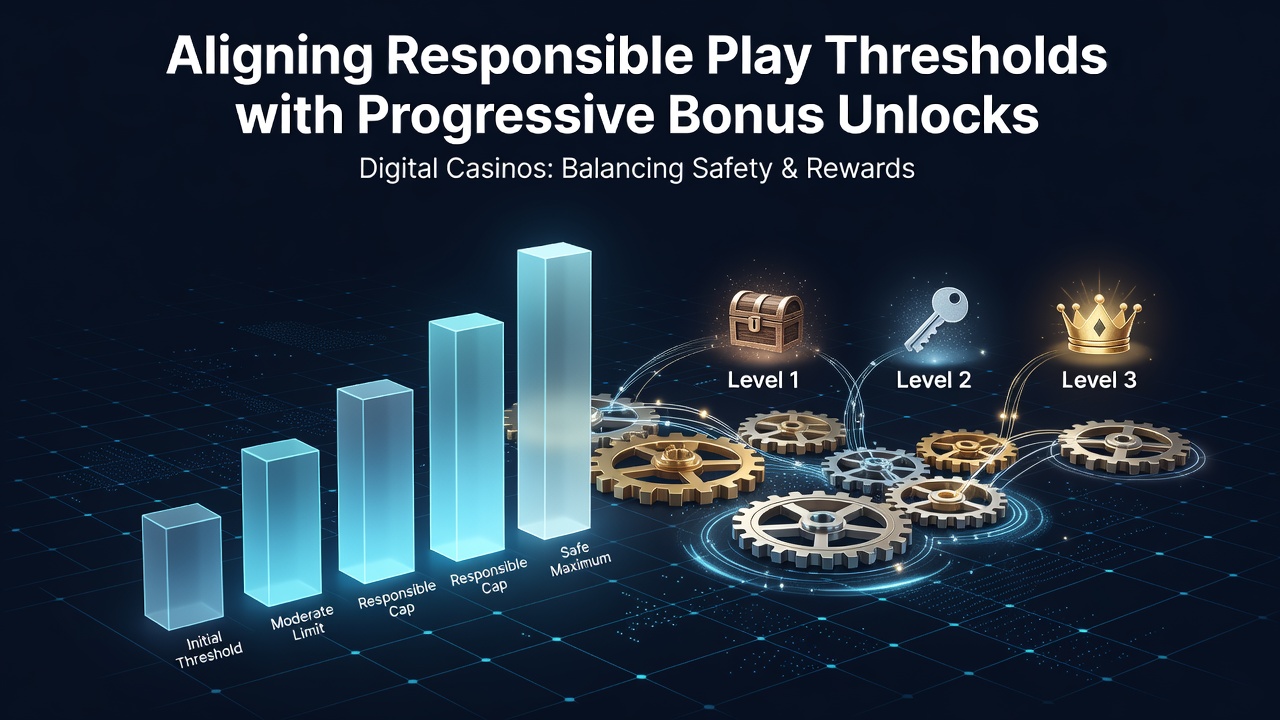
Digital casinos continue to refine how they connect player protection mechanisms with reward structures, and systems that tie responsible play thresholds directly to progressive bonus unlocks represent one approach gaining attention across multiple markets. These frameworks set specific limits on deposits, session duration, and net losses, then use those same metrics to determine when players advance through bonus tiers. Operators report that such integration allows reward progression only after players demonstrate adherence to predefined safety parameters, creating a built-in check that scales with activity levels.
Defining Core Components of the Alignment Model
Responsible play thresholds typically include customizable deposit caps, time-based session reminders, and loss-limit alerts that trigger when spending approaches a set amount within a rolling period. Progressive bonus unlocks operate on a ladder system where initial free spins or matched deposits give way to higher-value rewards as wagering volume increases, yet the model requires those volume increases to stay within the established thresholds. Data from platform analytics shows that when these two systems share the same backend variables, players reach mid-tier bonuses only after maintaining deposit activity below 80 percent of their chosen limit for consecutive sessions.
Software providers have developed APIs that feed threshold data into bonus engines in real time, allowing an unlock event to pause if a player’s loss meter hits its ceiling. This technical linkage means the progression bar fills gradually while the safety meter remains green, and any breach resets or freezes the reward path until the next compliance window opens. Observers note that June 2026 brought several platform updates across North American and European operators that standardized these shared data fields, reducing the lag between limit breach detection and bonus status adjustment to under three seconds.
Implementation Patterns Across Jurisdictions
Operators in Ontario have integrated these controls through the Alcohol and Gaming Commission of Ontario guidelines that encourage reward systems to reference the same player-account flags used for self-exclusion and deposit-limit enforcement. Similar patterns appear in New Jersey, where the Division of Gaming Enforcement requires that bonus eligibility checks reference the same real-time loss data already captured for responsible gaming reports. Both regions record higher rates of players completing bonus cycles without exceeding monthly loss targets when the systems share a single compliance layer.
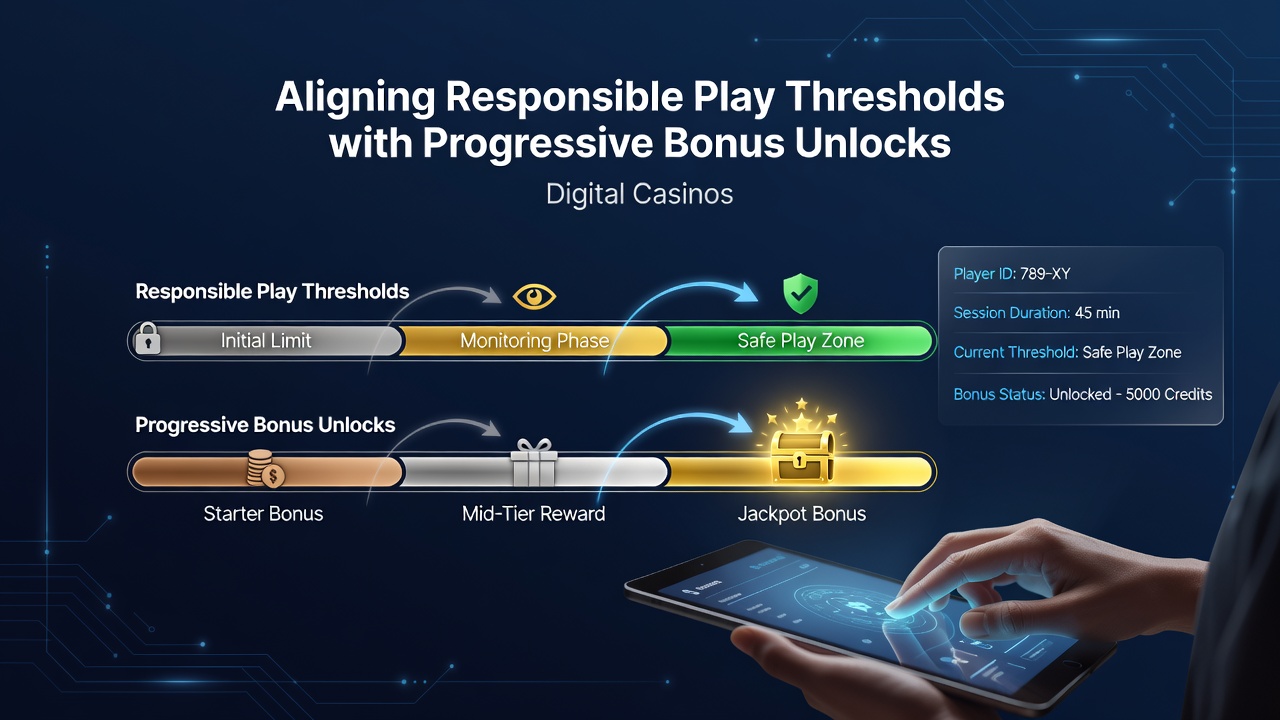
One case involves a mid-sized operator that introduced a three-stage bonus ladder requiring players to keep net losses below a weekly threshold before the second-stage unlock becomes available. Internal figures reveal that 62 percent of users who reached the second stage maintained losses within 70 percent of their personal cap, compared with 41 percent under the previous independent bonus system. The adjustment involved mapping each bonus stage to a percentage band of the player’s chosen loss limit, so stage-one unlocks at 30 percent utilization, stage two at 55 percent, and stage three only after the account shows sustained activity below 75 percent utilization across four consecutive weeks.
Technical and Operational Considerations
Developers achieve synchronization by storing threshold values and bonus progress in a unified player profile table, then running validation queries before every unlock event. When a session timer approaches its limit, the system can either extend the timer in exchange for a lower bonus tier or simply hold the current tier until the player resets within safe parameters. This design reduces the need for separate compliance teams to audit bonus campaigns after launch, since the same rule set governs both reward access and spending boundaries.
Research from academic groups tracking digital gambling behavior indicates that unified systems produce fewer instances of players requesting limit increases solely to chase the next bonus stage. A 2025 study published by a Canadian research consortium found a 19 percent drop in such requests among accounts using aligned thresholds versus those using standalone bonus programs. The study tracked over 48,000 accounts across six months and controlled for game type and average stake size, showing consistent patterns regardless of whether the titles were slots or table games.
Player Communication and Interface Design
Clear visual indicators help players understand the connection between their chosen limits and bonus availability. Dashboards display a dual meter where one bar tracks proximity to the loss or time threshold while an adjacent bar shows bonus stage completion, and both bars update simultaneously as play continues. Color coding shifts from green to amber when utilization crosses 60 percent, giving players an early cue that further activity will slow or pause reward progression.
Operators also embed explanatory text within the bonus claim flow that states the current utilization percentage and the exact threshold required for the next unlock. This messaging appears before any new wager is placed, ensuring players see the linkage without navigating to separate responsible gaming menus. Engagement metrics collected in June 2026 across several sites showed that players who viewed these integrated notices completed 27 percent more sessions without altering their preset limits compared with players who encountered only standard bonus terms.
Conclusion
Aligning responsible play thresholds with progressive bonus unlocks creates a single compliance surface that governs both safety parameters and reward access. Technical implementations across multiple jurisdictions demonstrate measurable reductions in threshold breaches during bonus cycles, while player-facing tools make the relationship between limits and unlocks transparent. Continued platform updates scheduled through late 2026 focus on shortening validation latency and expanding the same alignment logic to live dealer environments, extending the model beyond slots and virtual table games.